I Never Sang For My Father
Updated May 2026
The title of this piece is attributed to Robert Anderson, who wrote the melancholy play of the same title.
It has been over twenty years since I buried my father. Buried is perhaps too loose a term, as his body had already been reduced to ashes by the time I had returned ‘home’ to pay my last respects. For some reason, it was left to me to collect his remains one dismal day in January when the sky was the colour of dirty slate replete with low clouds scudding like furtive dogs across the sky.
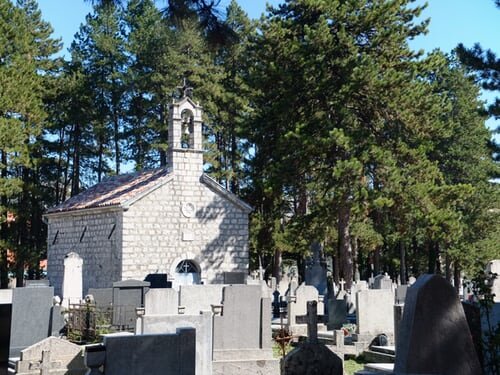
The funeral home was a sad, stand-alone gothic structure painted in a dull shade of cream, replete with a faux tower, making it appear as if it had been used on the set of The Adams Family. The front door, when opened, triggered a small bell that tinkled merrily as if one were entering a cheery stationary shop or a confectioner.
Once inside, I was met by a small-statured, nervous-looking undertaker wearing an ill-fitting morning suit, which was slightly stained and a little threadbare. After I had introduced myself, he nodded, consulted his ledger, and raised the delicate matter of the outstanding account for the cost of my father’s cremation.

Once the overdue invoice had been settled, several official-looking forms duly signed, and a receipt stamped and issued, he shuffled to the rear of the building and returned, carrying a small brown cardboard box held together by a piece of string that ended in an untidy bow. Our solemn business concluded, he hurriedly ushered me to the door, where he muttered the usual salutations and expressed his sorrow for my recent loss.
I have always found the language of death to be curiously prescribed as if lifted from a greeting card written by a frustrated copywriter locked away in the bowels of a Hallmark building somewhere.

I placed the container on the passenger seat of the car, wondering if I should secure it with the seatbelt. It sat there like a silent sentinel, and, I noticed, for some reason, that my driving habits became doubly cautious. It was as if I was waiting for a parental rebuke as to my reckless use of the clutch or told to temper my speed as I approached a stop sign,
Once cocooned within the solitude of my hotel room with blinds drawn and the brown box positioned in the middle of the bed, I, at last, plucked up the courage to attack the untidy knot holding the entire ensemble together.
Once the tangle had been conquered, I gingerly lifted the lid and stared inside, noting with interest that the contents barely filled half the space of the container. I lifted the package from its resting place and lay back on the bed, holding in my hand the last of my father, trapped inside a small, plastic bank bag.

Holding it up to the light, I could see that a crude attempt had been made to scratch the bank’s logo from the surface with little success, as the institution’s name was clearly visible.
‘ Ironically, it was the same bank that my father had despised with a passion, and he would rant and rave about their unethical business practices to any poor soul who would listen.
I twirled the bag between my fingers, looking at it from every angle, then brought it closer to my face to better see the greyish-white powder within. Judging by its weight, I estimated the pathetic receptacle's contents might fill a medium-sized teacup. This handful of dust and ashes was all that remained of an eighty-year-old man who had strode this world determined to be unremarkable.
It had been his emphatic wish that, upon his death, there was to be no funeral or memorial service, no fuss or, as he referred to it, “ simply have me burned and be done with it.” He seemed to have no sympathy for the living or, indeed, any of those of us left behind.

Death alone merely ends our time on earth; however, it fails to end relationships, which remain like an indelible stamp in the consciousness of those closest to the recently departed. I long suspected that sometime during his life, my father had lost his faith; even though he never spoke about it, he was just indifferent to the rituals of death and dying.
Truth be told, we never spoke about the act of dying; in fact, we never spoke much at all, really. He and I, even though we shared the same DNA, somehow never understood each other; it was as if the gene that governed the bond between fathers and sons had been deliberately left out of the sequence.

We muddled through my childhood and teenage years, keeping pretty much to ourselves like two menacing boxers circling each other in a too- small a ring, knowing full well that never a punch would be thrown.
He was certainly not a ‘bad man’ in any sense of the word. I was never beaten or abused; it was just that he was altogether distant and indifferent to my needs. He provided me with a decent enough education and a sanctuary of sorts within the family home, which, from the age of sixteen, I was chomping at the bit to leave.
In many ways, I was fortunate to have seen him before he left this world when I travelled across the seas to visit him during his last days. There were regrets on both sides, but it was far too late for those; however, today I take comfort in the fact that we parted on good terms.

I was determined to offer my own memorial service by scattering his ashes in a beautiful spot where he used to cast a line into the ocean, chasing the elusive fish that swam beneath the rocks. I remember him well, standing tall like a reckless sentinel atop an outcrop, the waves crashing at his feet almost willing the angry seas to sweep him from his precarious perch.
It was a place, perhaps, where he always seemed to be at his happiest.
Naturally, our last act together had to have an almost comical ending as I tried to spread his remains on those self-same turbulent waters by casting them into a prevailing wind. My sister, watching from afar, made the remark when the deed was done, saying, “You seem to have a bit of Dad in your eyebrow.”
I think even he would have found that amusing.
As the twig is bent, so grows the tree.
Paul v Walters is the author of several novels and an anthology of short stories. When he is not coccooned in sloth and procrastination in his house in Bali, he occasionally rises to scribble articles for various travel and vox pop journals.