
Semua Bisa Di Atur. The Four Words That Make Indonesia Work.

Indonesia, you’re puzzle, an enigma, a complex algorithm, a place full of wonder, a Pandora’s box, whose contents baffle and confuse those who choose to make your shores their ‘home.’
Each time I look at a map I am always amazed just how huge you are.

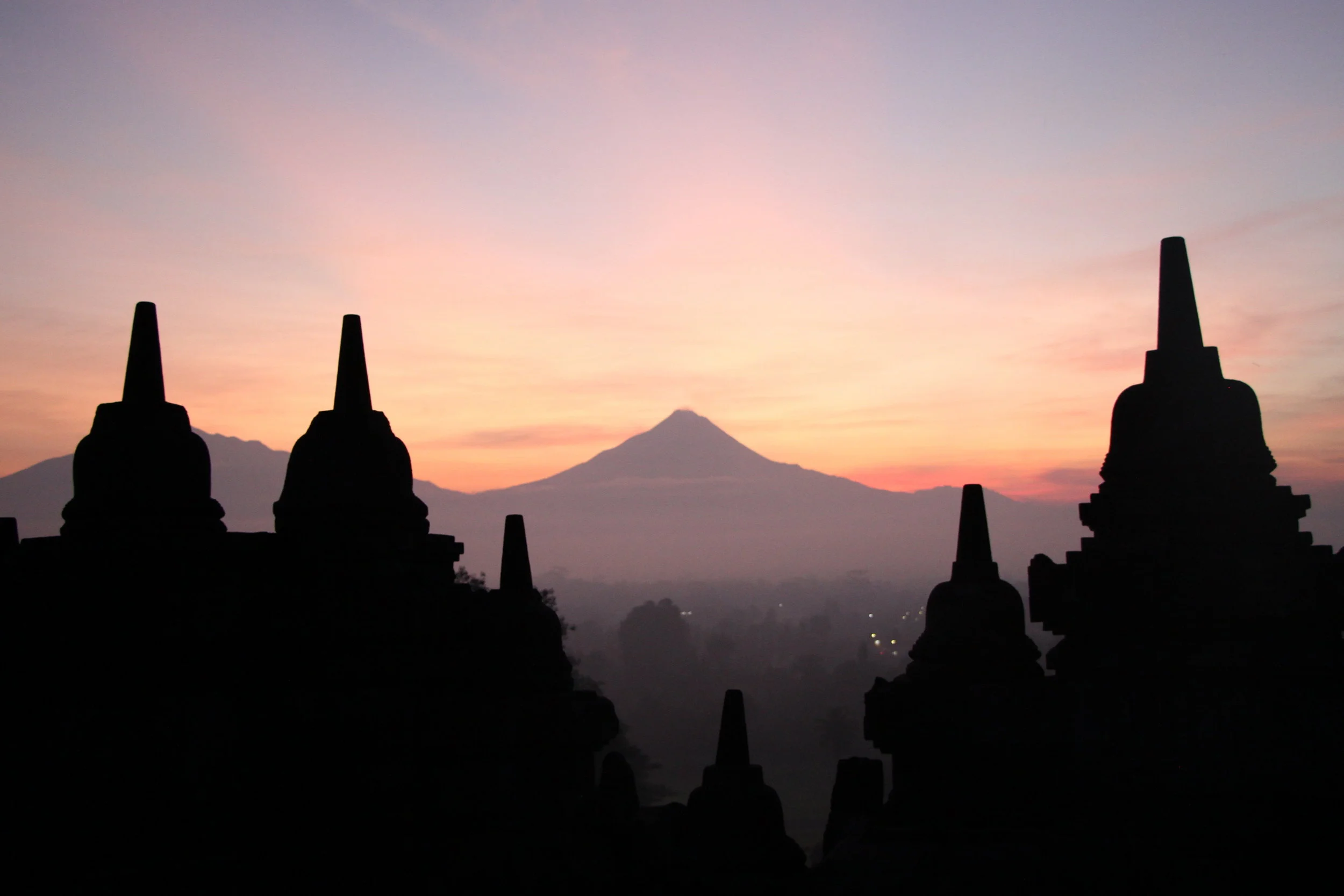
To the uninitiated it’s a lot to take in; seventeen thousand islands, five thousand one hundred and sixty kilometers east to west, over sixty archipelagos, that lie like broken spines in seas so azure, so unbelievably vibrant they are almost too beautiful to look at. And, all of this surrounded by majestic volcanoes and mountains whose sole purpose seems to be to try and reach up and touch a sky, delicious with stars.

If you allow it, Indonesia will slowly seduce you with her charms and her beauty and when you have succumbed she will call like a plaintive siren from the sea each time you try and leave her. It takes no time at all to become ensnared in her intriguing web.

What is it that makes her so appealing, so intriguing so beguiling and at times so tortuously frustrating? I ponder this point a lot lately. I suspect my initial feelings of intense desire have moved into what has become a long- term love affair, with all of the baggage that comes with it.

I’ve been a wanderer for most of my life, drifting aimlessly like flotsam from county to country sometimes putting down tentative roots while children were raised and careers pursued, yet all the time thinking, “where to next”? The taproot seemed never to be strong enough to hold me in that particular place’s soil and now its is time to test Indonesia’s to see if she will take me into her heart.

I’m often asked, “ Why Indonesia?” These days I simply answer, “ Semua bisa diatur.” (Anything can be arranged) These four words to me sum up everything that is good in this country. If I were president, I would try to have them etched into the Constitution and woven into the national flag. It's right up there in the positivity stakes with that all-time great copy line, “Just do it.”

Counties everywhere contain, within their borders, that most precious of all commodities, their people, as does Indonesia with its nearly three hundred million souls occupying over six thousand of its islands. The diversity of cultures, religions, languages and thousands of dialects goes a long way towards making up the complex puzzle that is at the core of this great nation.
If I lived here for the rest of my life I would be able to glean only a tiny glimpse of how it functions because, quite simply, it just does! To an outsider, its customs, its way of life, is a little like trying to decipher an intricate map that can only be navigated the “Indonesian way,” for any other way will lead to paths that head nowhere. Of course, virtually everybody will try to help guide you through your early, torturous months, and each one will have a completely different view and an even more confusing set of instructions to follow.

Lately, I have come to understand the two fundamental pillars that dominate every strata of society throughout the country: faith and family, not necessarily in that order. These values are the glue that binds together millions of people, many of them so very different in terms of language, beliefs, and even appearance, yet they are all one thing: ‘Indonesians.’
I am a foreigner in a foreign land, and no matter how long I stay here, I will always be a foreigner, but not necessarily an outsider. The spirit of giving and acceptance must be part of the nation’s collective DNA, as I encounter such genuine hospitality and generosity of spirit wherever I go.

The majority of my life to date has been spent in countries where its citizens worship at the altar of ambition, pursuit of money, power, and status, and beware those who happen to get in the way.
Age is not revered in the way it is in Indonesia. In the ‘west,’ the old and the infirm become an irritant, to be stashed away in soulless institutions with dishonest names like ‘Tranquillity Gardens, or ‘Peaceful Meadows. There, the aged will live out their twilight years surrounded only by those as ancient as they are, bereft of the love of family.

When I first arrived, I used to walk the streets of my neighbourhood, and cries of “Pagi Papa” would ring out from doorways and windows. I was a little taken aback at the audaciousness of those who would glibly refer to my age. Now I know that it is a term of respect, as I supposedly have an abundance of wisdom, not to mention a head of grey hair!. And now, I wear that particular salutation like a badge of honour.
Here, old people are cool…. I think!
It’s easy for a newly arrived resident to don a pair of rose -coloured glasses and gaze through the tinted lenses at this strange new world, seeing only the things one wants to see. It’s not ‘perfect’ here, for no place anywhere can attain that lofty perch. I still battle with a new language, I struggle to make sense of what should be simple, straightforward paperwork, and along the way, I learn to have infinite patience.

Should I stumble when confronted with what seems to be an insurmountable problem a few will gather, then a few more, a long chat will ensue, and with smiles all round, they will look at me and say, Don’t worry papa, “ “Samua bisa di atur”
I do so love it here!
Updated January 2025. All Photos copyright Paul v Walters .
Paul v Walters is the best-selling author of six novels and an anthology of short stories. When not coccooned in sloth and procratination in his house in Bali, he occassionaly rises to scribble a story or two for a range of international travel journals .

